
Urologist in Georgia
100doc.ge lists 30 doctors in urologist across 2 cities in Georgia — with experience, clinic and patient reviews.
Choose a city
Urologist doctors
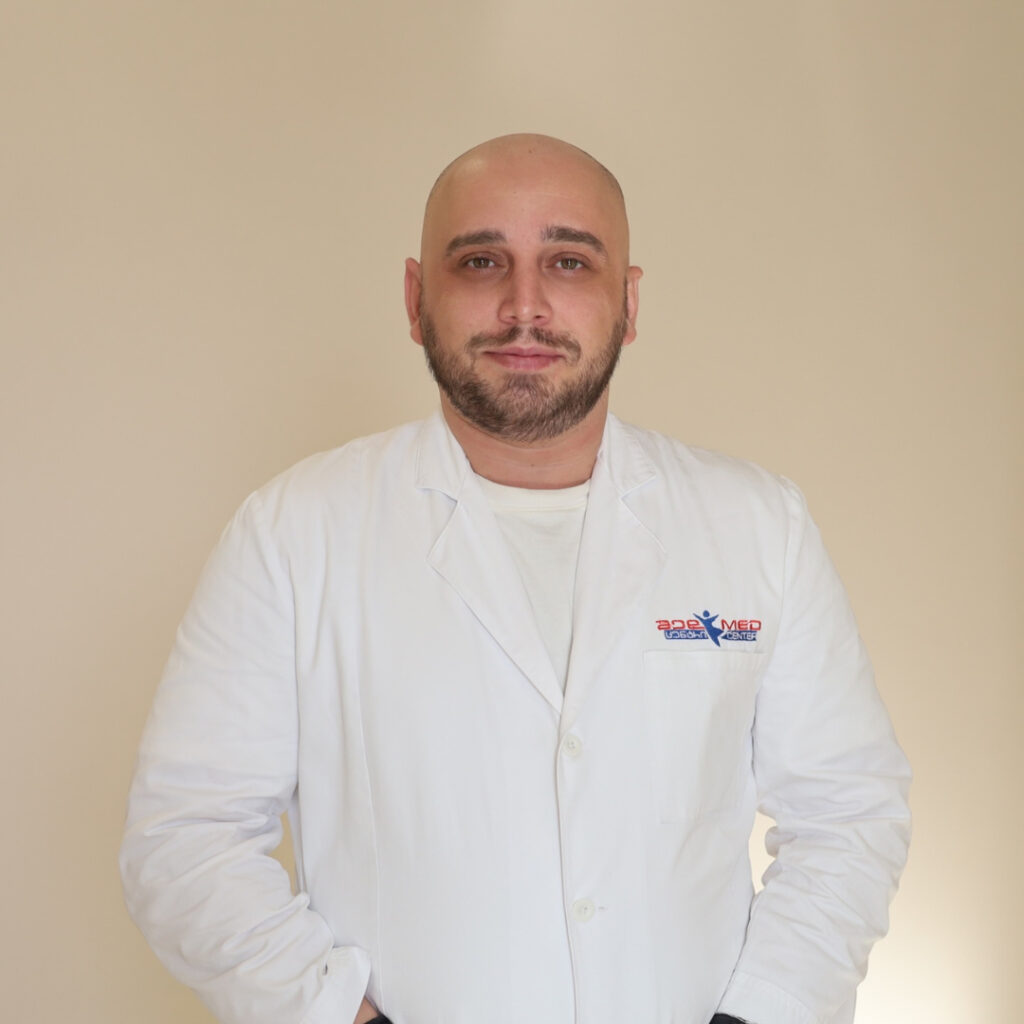
Tornike Iremadze
Urologist

Nejat Mikeladze
Gynecologist +2


Levan Dolidze
Urologist

Shalva Chovelidze
Urologist
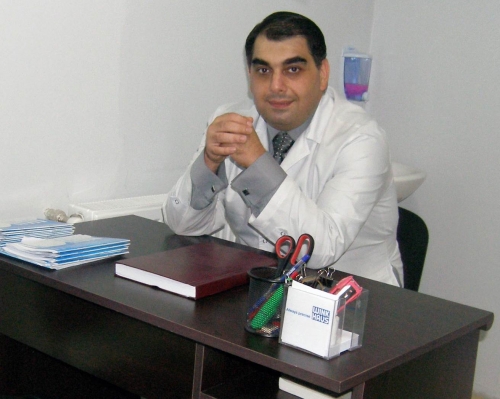
Konstantine Kobaladze
Urologist

Zurab Tsatsashvili
Urologist

Jemal Kikava
Urologist

Murman Shervashidze
Urologist

Rostom Khalvashi
Urologist

Tamaz Iremadze
Urologist

Tengiz Lortkipanidze
Urologist
What a urologist does
A urologist treats the urinary system in patients of any sex and the reproductive system in men. That covers the kidneys insofar as urine drainage is concerned, the ureters, the bladder and the urethra, and in men the prostate, testicles and penis. It is a surgical specialty: a urologist does not only prescribe medication but also performs procedures, from breaking up stones to operating on the prostate.
In practice the boundaries with neighbouring specialties run like this. Kidney tissue and filtration belong to nephrology, male reproductive health in depth to andrology, and children's urological problems to paediatric urology. In smaller Georgian towns one specialist often covers all of these; in the larger Tbilisi clinics the split usually exists.
Reasons people come in
The most common one is trouble passing urine: pain and burning, frequent urges, a feeling that the bladder has not emptied, getting up at night, a weak stream. In men over fifty these symptoms are often linked to benign enlargement of the prostate; in women of any age, to cystitis.
The second large group is stone disease. It announces itself as a sudden severe pain in the flank or lower back that can radiate to the groin and come with nausea. That episode is called renal colic, and it needs care the same day.
The third is blood in the urine. It may be visible or show up only in a test. The causes are sometimes harmless, but blood in urine is never treated as normal and always warrants investigation, even if it stopped on its own.
Then there are the male-specific reasons: reduced erections, pain in the scrotum, or a couple not conceiving after a year of regular unprotected sex. The last one is a reason for both partners to be assessed rather than the woman alone — a male factor is involved in roughly half of cases.
When to seek care urgently
Some situations call for emergency care rather than a booking. Complete inability to pass urine with a full bladder is acute retention and needs intervention within hours. Flank pain together with a fever above 38 °C and chills means infection has joined an obstruction; that combination is dangerous and is treated in hospital.
Immediate care is also needed after injury to the genitals, for sudden severe pain in a testicle — which can mean torsion, where the organ is only saved in the first hours — and for heavy bleeding with clots in the urine.
What an appointment involves
A first appointment starts with conversation: the doctor asks what the symptoms are, how long they have been there, what illnesses and operations you have had, what you take. An examination follows, its extent depending on the reason for the visit; men with urinary symptoms are usually offered a digital examination of the prostate.
The usual investigations are a urinalysis, a urine culture where infection is suspected, an ultrasound of the kidneys and bladder, and for men past a certain age a PSA blood test. Suspected stones may call for a CT scan. Which of these you need is the doctor's call: there is no universal "test for everything" list, and ordering investigations for yourself in advance usually means paying for the wrong ones.
Choosing a urologist
Look at three things. First, focus: if your question is male infertility or erectile function, a doctor who works on that specifically is more useful than a general urologist. Second, what the clinic can do: with stone disease it matters whether the clinic has lithotripsy equipment, otherwise you will be sent elsewhere for the procedure itself. Third, language, if discussing intimate symptoms without an interpreter matters to you.
Read reviews for their content rather than the average score: complaints about queues and complaints about a doctor not listening mean very different things, and for urology the second matters more. On 100doc.ge a rating appears only when the doctor actually has reviews from our users.
Urology in Georgia: what to know
Urological care is concentrated in Tbilisi and Batumi, where there are both more specialists and better access to equipment. In smaller towns there is usually one urologist or two, and patients needing surgery are referred to the capital.
Some clinics work with patients from abroad and consult in English and Russian. If you are travelling to Georgia for treatment, establish in advance whether follow-up after surgery is included and what happens if a complication appears once you have flown home — that question is usually forgotten, and it matters more than the price of the operation itself.
Official information about Georgia's health system, including registries of licensed medical facilities, is published by the Ministry of Health at moh.gov.ge. Epidemiological data and public health guidance come from the National Center for Disease Control at ncdc.ge. We link to them because any health information, including ours, is worth being able to check against an official source.
Prevention that actually helps
For stone disease the main lever is fluid intake: enough liquid keeps salts in the urine less concentrated. How much depends on the composition of your stones, the climate and how your kidneys work, so it is worth agreeing on a figure with your doctor rather than taking a general number off the internet. Through the hot Georgian summer the requirement is higher than in winter.
Men over fifty can usefully discuss prostate monitoring with a doctor. Whether to test PSA and how often is an individual decision: the test has real benefits and well-documented limitations, and talking those through beats deciding on your own in either direction.
Women with recurring cystitis benefit from going through the triggers with a doctor, from urination habits to related gynaecological conditions. Recurrent cystitis treated each time with the same antibiotic course and no attempt to find the cause tends to come back.
Children and urology
Paediatric urology is its own field, not a scaled-down version of the adult one. In boys the commonest reasons are an undescended testicle, phimosis and recurrent urinary infections; in girls, those same recurrent infections, sometimes linked to how the tract is formed. Bedwetting up to a certain age is a normal variant and needs no treatment of its own, but if it persists beyond that or returns after a dry spell, it is worth seeing a doctor.
With a child it is especially important not to delay over pain in a testicle: torsion is more common in adolescents than people assume, and the window is narrow. In Georgia paediatric urologists work mainly in Tbilisi, so in the regions the paediatrician is usually the first point of contact and decides whether a referral to the capital is needed.
What “watchful waiting” means and when it is the right call
Urology often produces situations where the right answer is not immediate treatment but observation. A small stone that is not obstructing drainage may pass on its own; benign prostate enlargement with mild symptoms may need no operation for years. In that case the doctor proposes a monitoring plan: how often to repeat the tests, and which symptom means coming back sooner.
If watchful waiting is offered, it is worth pinning down three things: which specific sign are we waiting for, when is the next check, and what would change the plan. Those questions are what separate watchful waiting from doing nothing — and the answers show whether your case has been thought through.
Frequently asked questions
Urologist or nephrologist?▾
A urologist treats the urinary tract and the male reproductive system — stones, bladder infections, the prostate, incontinence. A nephrologist treats kidney tissue itself: glomerulonephritis, chronic kidney disease, problems with filtration. Pain on urination, blood in the urine or renal colic go to a urologist. Protein found in your urine, a persistently raised creatinine or declining kidney function go to a nephrologist. Kidney stones are managed by a urologist, but when stones keep coming back you often need both.
Is this a men's doctor, or do women see urologists too?▾
Women see urologists just as often as men. Cystitis, urinary incontinence and stones are common reasons, and cystitis is considerably more frequent in women because the urethra is shorter. The male side — prostate, erectile function, male infertility — is a separate field called andrology, though in many Georgian clinics the same urologist covers it. If the doctor's gender matters to you, ask when booking: the catalogue shows names and photos, but the clinic can confirm.
When does renal colic mean the emergency room rather than an appointment?▾
Go to emergency care immediately if pain in your flank or lower back comes with a fever above 38 °C and chills, if you cannot pass urine at all, if there is heavy blood or clots in your urine, or if ordinary painkillers do not touch the pain and no position brings relief. A stone combined with infection is measured in hours, not days. A scheduled appointment is the wrong route in that situation.
What language will I be able to speak with a urologist in Georgia?▾
Many doctors in Tbilisi and Batumi consult in English and Russian, but this depends on the individual specialist rather than on the clinic as a whole. Doctor profiles on 100doc.ge list consultation languages where we have them from the doctor's or clinic's own record. An absent language does not mean the doctor lacks it — asking when you book is the reliable way to find out.
Do I need a referral to see a urologist?▾
Private clinics in Georgia usually accept direct bookings without a referral from a family doctor. If you are going through insurance, the rules depend on your policy: some programmes require the family doctor to be the first point of contact. Check coverage with your insurer before the visit — that is not information we hold.
What should I bring to a first appointment?▾
Previous urine and blood test results, any ultrasound or CT images and reports, a list of the medicines you take with doses, and discharge summaries from past hospital stays. If you have passed a stone before, bring its analysis if one was done: the composition of the stone changes both treatment and prevention. Reconstructing all of this from memory during the appointment takes longer and is less accurate than bringing the paperwork.
This page is for general information and does not replace a consultation. A diagnosis can only be made in person, after examination and tests.
Updated: