
Multilingual Clinic Search Tools Review
Prepared by the 100doc.ge editorial team · Updated June 22, 2026
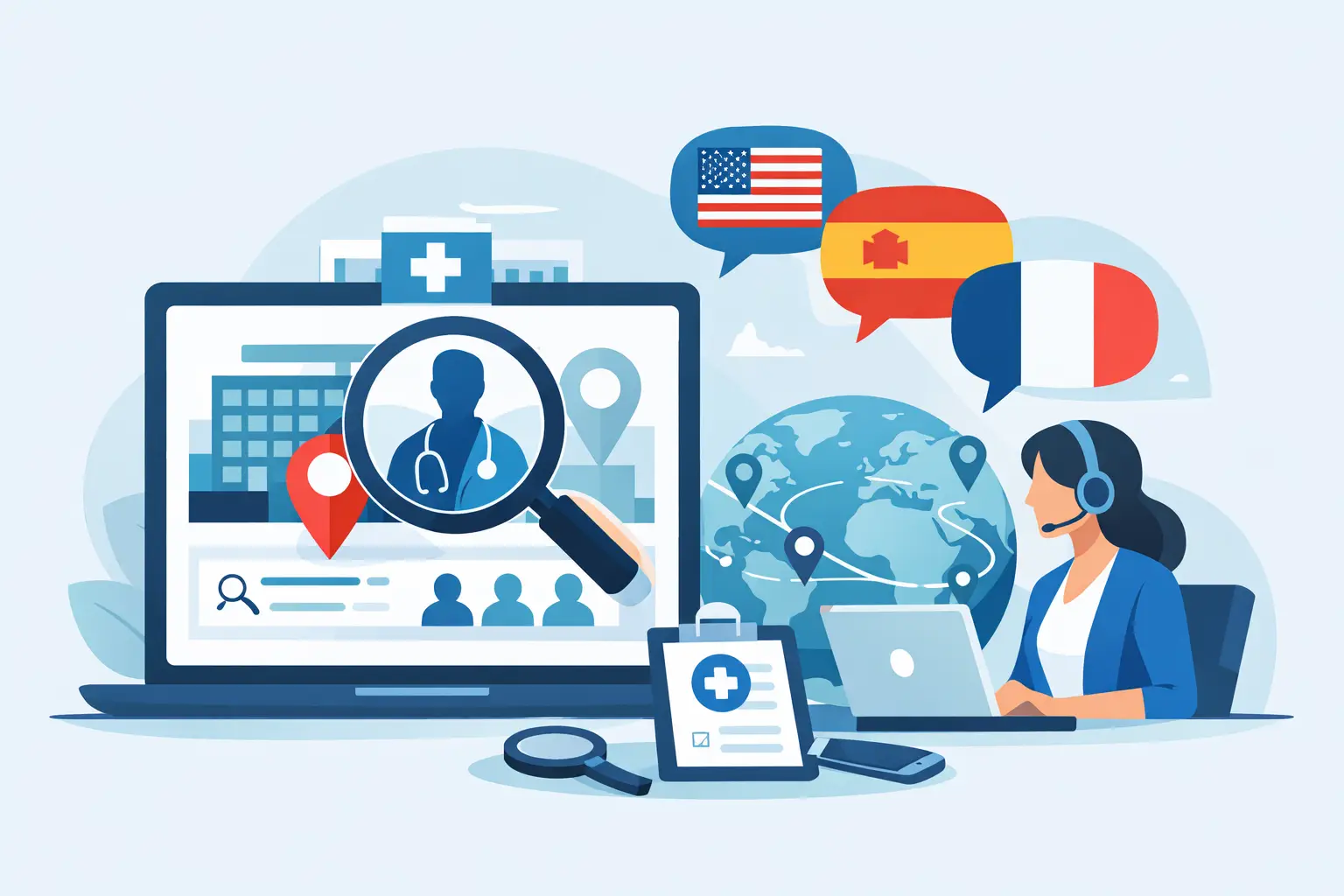
You rarely notice how hard it is to find a clinic until you need one fast, in a country where you do not speak the language well. That is exactly where a multilingual clinic search tools review becomes useful. For expats, tourists, and internationally mobile families in Georgia, the real question is not just which platform lists clinics, but which one helps you compare them with enough clarity to make a safe decision.
A generic search engine can show you names and maps. That is not the same as helping you choose between a clinic with strong patient feedback, a doctor who speaks Russian, and a provider whose prices are visible before you book. In healthcare, the difference matters.
What makes a good multilingual clinic search tool
The best tools do more than translate menu items. They reduce uncertainty. If you are searching for a gynaecologist in Tbilisi, a paediatrician in Batumi, or a dental clinic in Kutaisi, you need more than a list of businesses. You need a structure that lets you filter by speciality, language, city, price, and trust signals without guessing what is hidden behind each profile.
A useful clinic search platform should answer a few basic questions quickly. Can I understand the information in my preferred language? Are the doctors or clinics verified in some way? Can I compare reviews in one place? Is the location clear? Is there enough detail about qualifications or experience to tell one provider from another?
That sounds simple, but many tools still fail on one or two of these points. Some are strong on search but weak on profile quality. Others offer many listings yet provide almost no help with language compatibility.
Multilingual clinic search tools review - the criteria that matter
If you are comparing platforms, language support should be the starting point, not a bonus feature. A multilingual interface is useful, but it is only part of the picture. In practice, patients often need three layers of clarity: the platform language, the clinic information itself, and the likely communication language during the appointment.
That is where many search tools become less helpful than they first appear. A site may be available in Russian or English, but the doctor descriptions may be incomplete, machine-translated, or inconsistent. A clinic may appear easy to contact, yet there is no clear indication whether the staff can actually speak your language.
Verification is the next factor. In healthcare directories, trust depends on whether listings feel maintained and credible. If profiles include education, work experience, specialisation, patient ratings, and sometimes appointment price, users can make a more grounded comparison. If every listing looks the same and lacks detail, the platform is doing very little to reduce risk.
Reviews also need context. A five-star rating with two reviews means something different from a strong rating based on dozens of patient comments. Platforms that aggregate visible review counts help users judge whether feedback is broad enough to be meaningful.
Price transparency deserves more attention than it usually gets. For many expats and visitors, especially those paying out of pocket, seeing consultation prices upfront changes the decision process. It helps narrow the shortlist and avoids awkward surprises later.
Where general search falls short
General search engines and map tools are often the first stop because they are familiar. They can be useful for opening hours, phone numbers, and directions. But they are less reliable for nuanced healthcare comparison.
The problem is not that they are useless. The problem is that they are broad tools, not healthcare-specific ones. They rarely let you compare doctors by speciality, years of experience, review depth, and language support in a structured way. If you are unfamiliar with Georgia’s healthcare market, you may also struggle to tell whether one clinic is a general medical centre, a specialist practice, or a hospital unit.
Maps can also reward visibility rather than suitability. A clinic with better local search optimisation may appear before a more appropriate provider. For routine needs that may be acceptable. For paediatrics, women’s health, diagnostics, or ongoing care, it is often not enough.
Directory platforms vs broad listing sites
Healthcare directories are usually better suited to comparison because they are built around patient choice. The stronger ones let you filter by speciality, city, and review score, then inspect individual profiles with enough detail to make a shortlist.
That said, not all directories are equally helpful. Some focus on volume, which means many listings but very little curation. Others are narrower but more useful because the profiles contain practical details patients actually need. In a multilingual setting, curation often matters more than size.
For example, if you are a Russian-speaking parent looking for a paediatrician, 30 thin listings are less valuable than 10 well-documented ones that clearly state qualifications, consultation language, and patient feedback. Search tools should save time, not create another layer of research.
This is also where a platform such as 100doc.ge fits naturally. Its value is not simply that it lists doctors and clinics in Georgia, but that it structures the search around the real decision criteria international users care about: language accessibility, specialisation, reviews, and visible pricing.
What users in Georgia should check before trusting a platform
A clinic search tool can look polished and still be frustrating once you start using it. The easiest way to test quality is to run a realistic search. Try looking for a common need such as dermatology, dentistry, or a child specialist in your city. Then check how much the tool actually helps you narrow the field.
If the filters are weak, the profiles are sparse, or every clinic requires a separate phone call just to confirm price and language, the platform is not doing enough of the work. A reliable search tool should reduce back-and-forth.
It is also worth checking whether city-level relevance is handled properly. Healthcare access differs between Tbilisi and smaller cities. In larger urban areas, users may care more about comparing many clinics by subspeciality and price. In smaller cities, the tool becomes more valuable if it clearly shows which options are actually available nearby rather than presenting a vague national directory.
Another useful sign is profile consistency. If one doctor page includes education, experience, reviews, and pricing, but the next five do not, the platform may be incomplete or poorly maintained. Consistency builds confidence because it makes comparison fairer.
The trade-offs to keep in mind
No clinic search platform is perfect, and expectations should be realistic. A highly curated directory may have fewer listings. A larger platform may have wider coverage but less detailed profiles. A tool that is excellent for Russian-speaking users may be less thorough in other languages.
There is also a difference between discovery and booking. Some platforms help you identify the right clinic but still require direct contact for confirmation. That is not necessarily a flaw if the search information is accurate and transparent. The issue is whether users know this upfront.
Reviews can be helpful, but they are not the whole story either. A newer doctor may have limited feedback but strong credentials. A busy clinic may have mixed reviews that reflect waiting times rather than poor medical care. Search tools are most useful when they help users weigh several signals together rather than pushing one metric as decisive.
How to choose the right tool for your needs
If your priority is language compatibility, start there and filter everything else afterwards. For many users in Georgia, especially recent arrivals, a doctor who can communicate clearly in Russian or English is not a preference but a practical requirement.
If cost matters most, prioritise platforms that display consultation prices or at least make fee ranges easier to compare. If continuity of care matters, such as for chronic conditions or family medicine, look for fuller doctor profiles rather than clinic-only listings.
For urgent but non-emergency needs, speed and clarity matter more than breadth. In that case, choose the tool that gives you a short, usable shortlist quickly. For planned care, a more detailed comparison process is worth the extra time.
The best multilingual clinic search tools are not the ones with the most pages. They are the ones that lower uncertainty at the moment you need care. They make it easier to understand who is available, what they offer, how patients rate them, what it may cost, and whether communication will be straightforward.
That is the standard worth using. If a platform cannot answer those questions clearly, it is not really helping you choose. It is only helping you keep searching.
When you are dealing with healthcare in an unfamiliar system, clarity is not a luxury. It is part of feeling safe enough to book the appointment.